.png)
The 24/7 Reality: Why Self-Care is the Cornerstone of Lymphoedema Management

Updated: Jul 5
July 24 is International Self-Care Day, a date chosen specifically to remind us that for many, self-care is a 24/7 necessity, not a luxury.

While for some, the term "self-care" may conjure images of spa days. True self-care is the daily, deliberate effort to support one's own health across physical, mental, and social dimensions (1).
This is never truer than for those living with lymphoedema, where self-care is not merely a "nice to have"—it is the very foundation of effective management and long-term health (2).
For the millions of people globally who live with chronic diseases such as lymphoedema, this 24/7 approach isn't just a wellness trend—it is the essential foundation of health, with the potential to improve and maintain quality of life (3).
Reframing the Core: Self-Care as the Foundation
While clinical interventions like surgery or therapist-led intensive treatments are vital tools, the true "core" of lymphoedema management happens at home. By reframing self-care as the cornerstone of therapy, we empower individuals to transition from passive recipients of care to active agents of their own health (4).
Historically, lymphoedema management has been viewed through the lens of therapist-led interventions, with self-care as a secondary maintenance phase. However, evidence from both high-income and low-resource settings suggests we should invert this model. In countries like Bangladesh and Ethiopia, where specialist care is scarce, self-care is not a complement to treatment; it is the treatment.
Research demonstrates that when individuals are empowered to lead their own care, the results can be superior to therapist-administered protocols alone.

A study in Tanzania compared people affected by filariasis-related lymphoedema who were taught to perform their own lymph drainage and bandaging, with a group that continued to receive therapy at the clinic.
Both groups did very well, but the self-administered group did better in terms of overall volume loss at 3-weeks (450ml vs 850mls). This difference favouring the self-treated group was significant at 3- 6- and 9-months measures (5). The authors concluded that
Giving more responsibility to patients in the handling of lymph drainage and bandaging resulted in a greater sustained reduction in leg volume than in the group where the patients were not taught to do the treatment themselves (5).
A 2025 RCT found similar results among women with breast-cancer related arm lymphoedema (BCRL) who were either treated by a professional, or learned to do self-administered CDT.

Again both groups had significant improvements overall, with few between group differences, demonstrating that CDT performed at home can be at least as effective as therapy delivered in the clinic (6).
Each group did slightly better on some of the parameters measured, with the self-care group achieving greater reduction in arm volume, tissue stiffness, heaviness, and fatigue (Fig 2).
Evidence-Based Success: Client Centred Care
The vital role of self-monitoring, lifestyle modification, and the establishment of consistent self-care routines is well-supported by research across multiple chronic diseases, including diabetes, and is often the deciding factor in the success of medical interventions.

Within chronic disease management, it can be argued that the therapist's primary objective has always been to facilitate long-term self-efficacy. As individuals take greater ownership of their health, the professional role must evolve from a "provider" of passive treatments to an "educator and mentor".
This shift does not diminish the therapist’s importance but rather reframes it; time invested in training clients in individualised home-based protocols can deliver superior and more personally satisfying outcomes for both patients and their families.
Effective education and support require more than a brief demonstration or a brochure, which does not constitute teaching complex skills like self-massage. Just as therapists require rigorous training and correction when learning manual lymphatic drainage (MLD), clients must also have the opportunity to have their techniques checked, corrected, and guided to ensure efficacy. In the study on BCRL, therapists spent two hours teaching the CDT program, allowing clients time to practice under supervision and providing reinforcement through booklets and videos. Similarly, the self-CDT group in Tanzania received individual instruction for four days, practicing self-manual drainage for 30 to 45 minutes each day before learning to apply their own bandages.
A Global Perspective: Self-Care as Saviour of Health-Care
The World Health Organization (WHO) defines self-care as the ability of individuals, families, and communities to promote health, prevent disease, and cope with illness—with or without the support of a healthcare worker. This is not merely a "nice to have" complement to treatment; it is a global necessity. Almost half of the world's population have no access to essential health services, and more than 1 in 5 experiencing financial hardship due to out-of-pocket health expenses.

In more than 70 countries where lymphatic filariasis (LF) is endemic, there are no local lymphoedema clinics or access to compression garments. In these settings, self-care is not an adjunct—it is the core treatment.
This reality is mirrored in high-income settings where Lymphoedema clients go untreated whilst navigating long waitlists, geographical barriers, and high costs. The average cost of BCRL-care is over $3,000 annually, making self-management the most realistic long-term therapy. Even those in wealthy nations must rely on their own daily actions to maintain limb health (6).
Practical Self-Care Tips for Your Daily Routine
Success in lymphoedema management depends on small, frequent actions that provide consistent lymphatic support. To make self-care sustainable, it must be integrated into the fabric of daily life.
Here are practical ways to integrate self-care into your life:

Enlist Your "Village": Have a friend or family member attend education sessions to help you retain retain complex information. Family members can learn to apply compression bandages or provide gentle reminders for exercises and self-massage.
Be Your Own Monitor: Track your symptoms over time keeping a diary or electronic record of the changes.
If you are taking circumference measures, choose anatomical landmarks such as a freckle, or bony protuberance to ensure you measure the same place every time. Lift and palpate your skin and tissue to assess for changes in texture or stiffness.
Use a 1-10 scale for symptoms like pain and heaviness, where 1 is almost no symptom present and 10 is the worse imaginable.
Habit Stacking: Link lymphatic actions to existing habits.
Drink a full glass of water before every meal or whenever you drink coffee or alcohol.
Practice deep abdominal breathing while waiting in a queue. It is an invisible but powerful way to stimulate your lymph system, and no one will even know you're doing it.
Elevate your legs or arms while watching TV, doing active foot paddling or arm exercises for the duration of the advertising breaks.
Skin and Touch: Look after your skin meticulously. Wash and dry skin folds and spaces between your toes to prevent fungal infection.
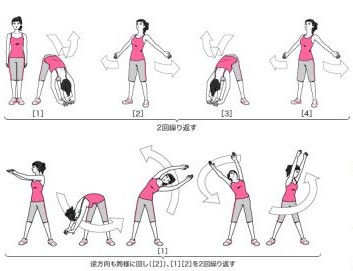
The 10-Minute Rule: The lymphatic system responds best to small, frequent stimuli. A Japanese study showed that just 10 minutes a day of gentle exercises, self-massage, and skin care led to significant limb volume reduction and, most importantly, the softening of fibrotic tissue (7). Make a “self-care menu” of 10-minute activities you enjoy and that are good for your lymphatic system to give you options and bring some variety to routine self-care.
Conclusions
Ultimately, self-care empowers the individual to reclaim control, and in lymphoedema, the most powerful intervention is the one that happens at home, every day, for life.
Self-care isn’t an indulgence; it’s healthcare.
This International Self-Care Day, let's recognise that the person most responsible for your health is you—and with the right support, you are more than capable of leading the way.
Join our FREE interactive webinar on July 24.
Bibliography
WHO Fact Sheet https://www.who.int/news-room/fact-sheets/detail/self-care-health-interventions
Karaca-Mandic, P., et al. (2023). Lymphedema self-care: economic cost savings and opportunities to improve adherence. Cost Effectiveness and Resource Allocation.
Douglass, J., Graves, P., & Gordon, S. (2016). Self-care for management of secondary lymphedema: a systematic review. PLOS Neglected Tropical Diseases, 10(6), e0004740. https://www.ncbi.nlm.nih.gov/pmc/articles/PMC4898789/pdf/pntd.0004740.pdf
Douglass, J. (2025). Self-Care in Lymphoedema Management: Lessons and Opportunities from Rural Bangladesh. ALA Journal, VOL 26, Issue 1, March 2026
Bernhard, L., et al. (2003). Management of Patients with Lymphoedema Caused by Filariasis in North-eastern Tanzania. Physiotherapy.
Gultekin, S. C., et al. (2025). Self-administered versus lymphedema therapist-administered complex decongestive therapy protocol in breast cancer-related lymphedema. Breast Cancer Research and Treatment.
TalkingLymph, 2025. Every Little bit helps.


Thank you for the wonderful post. I am thinking about how important self-care is for the lives of lymphedema patients and how we can support them in that regard.